
When you were choosing your career, didn’t it start with a flood of questions? What should I study next? Which stream suits me? What marks will I need? How do cut-offs work? Which entrance exams should I prepare for? Are there scholarships? What if I make the wrong choice?
Phew… it’s a lot to think through.
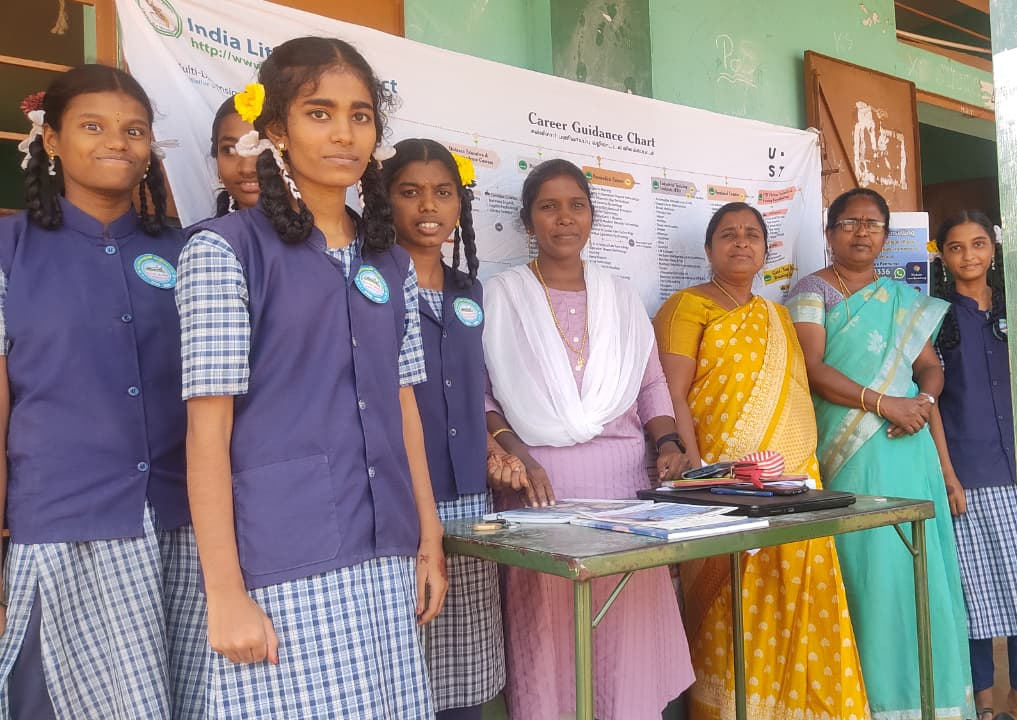
For thousands of students in government higher secondary schools across Tamil Nadu, the Uyar Kalviyae Engal Illakku (Higher Education is our Goal) event created a space where these questions could be voiced openly and answered with clarity through structured guidance. This was made possible through a collaboration between the Department of School Education, the Naan Mudhalvan Program, and ILP, helping students across Chennai, Chengalpattu, Kanchipuram, Kumbakonam, Thanjavur, and Tenkasi gain clarity on higher education pathways.
Focused on Class 11 and 12 students, the event brought together students, parents, and alumni. Career talks by professionals from diverse fields, interactive career stalls, and notice boards showcasing students’ dream careers helped make aspirations tangible and achievable. Clear, practical guidance on entrance exams and scholarships further supported informed decision-making.
One of the strongest aspects of the event was active parent participation, which brought greater depth to career conversations. Using ILP’s career guidance charts as a shared reference, students and parents were able to better understand career options, cut-off requirements across streams, and entrance exam pathways. Families visited the ILP Career Guidance stall together to ask questions, clear doubts, and move towards more informed academic decisions.
The event reaffirmed a simple but powerful truth: when students and parents engage together with the right guidance, clarity replaces confusion and confidence follows.
The 𝗖𝗮𝗿𝗲𝗲𝗿 𝗚𝘂𝗶𝗱𝗮𝗻𝗰𝗲 𝗖𝗵𝗮𝗿𝘁 is available to all students for free: https://lnkd.in/g8R4U8v4
Students can also benefit from the 𝗖𝗮𝗿𝗲𝗲𝗿 𝗣𝗹𝗮𝗻𝗻𝗲𝗿 𝗶𝗻 𝘃𝗮𝗿𝗶𝗼𝘂𝘀 𝗹𝗮𝗻𝗴𝘂𝗮𝗴𝗲𝘀: https://lnkd.in/gG9Z_gMu
Thank you to Naan Mudhalvan, City Union Bank, School Education Department, Tamil Nadu, Namma School Namma Ooru Palli, HCL Foundation
#GovernmentSchools #EducationForAll #CareerGuidance #CareerPathways
At the height of the COVID-19 pandemic, when school closures threatened to create lasting learning gaps, India Literacy Project (ILP) launched the Village Learning Centers (VLC) and Vidya Saathi (VS) programs with a single, urgent goal: to stem learning loss and ensure that children in rural communities did not fall behind.
What began as a pandemic response has since grown into one of ILP’s most meaningful and community-driven initiatives. Today, we are proud to reflect on the tangible impact of these programs—and the inspiring ownership taken by the communities themselves.
Building Learning Ecosystems in Rural Andhra Pradesh
During 2021–2022, ILP established 105 Village Learning Centers across 105 villages in seven mandals of Andhra Pradesh: Gara, Srikakulam (Rural), Etcherla, Ponduru, G. Sigadam, Laveru, and Ranastalam.
Under the guidance of the Project Director, and with the collaborative efforts of Youth Club Bejjipuram (YCB), Balavikas, and the School Readiness Team, a dedicated group of seven community organizers and one project coordinator worked tirelessly to bring the program to life. Anganwadi teachers played a crucial role in identifying and selecting Vidya Saathis—local volunteers who would become the backbone of each learning center.
Another major effort involved going door-to-door to mobilize children and families. Through trust, persistence, and community engagement, children were brought together in safe, supportive learning spaces—where Vidya Saathis helped them not only catch up, but thrive.
Measurable Learning Gains
Over a nine-month period, the impact was clear and measurable. 1,466 children showed improved learning levels across Mathematics, English, and Telugu.
A comparative study conducted in 2022–2023 revealed:
-
75% of children improved their achievement levels in Mathematics
-
71% showed improvement in English
-
69% demonstrated progress in Telugu
As schools reopened post-pandemic, both parents and teachers observed noticeable improvements in children’s confidence, comprehension, and academic performance—affirming the effectiveness of the VLC/VS model.
Community Ownership: A Powerful Endorsement
As ILP transitioned out of pandemic-specific programming, funding reallocations led to a reduction in the number of VLCs from 105 to 50. What followed, however, was nothing short of remarkable.
Recognizing the value of these learning centers, local communities stepped forward to sustain 65 VLCs independently—a powerful testament to the trust and impact ILP has built at the grassroots level.
Community-supported VLCs continue through:
-
30 VLCs funded by parent support
-
23 VLCs supported by Headmasters and teachers
-
3 VLCs supported by local industries
-
8 VLCs sustained through the volunteer efforts of Vidya Saathis
-
1 VLC funded by village employees
This heartwarming development is truly a feather in our cap. It demonstrates that VLCs are no longer just ILP-run initiatives—they are community-owned institutions. This strong local foundation now enables ILP to redirect resources and attention to other villages and regions that need support.
Beyond Academics: Protecting Childhoods
The impact of Vidya Saathis extends well beyond classroom learning. They are often trusted advocates for children’s rights and well-being.
One such powerful story comes from Odisha, through our partner NGO Unified Action Council (UAC), NIMAIN. A 13-year-old girl studying in Class VIII had been engaged for marriage. Recognizing the seriousness of the situation, Vidya Saathis, community organizers, and partner NGOs acted swiftly.
Through sustained dialogue and intervention, the child marriage was successfully prevented. The parents provided a formal undertaking that the marriage would not be solemnized before the girl turns 18 years old, with an understanding of the legal consequences otherwise.
Looking Ahead
From bridging learning gaps to safeguarding childhoods, the VLC and Vidya Saathi programs exemplify what is possible when communities, volunteers, and organizations work together with shared purpose.
As we look ahead, ILP remains committed to expanding this model—bringing learning, protection, and opportunity to even more villages across India.
Together, we are not just supporting education—we are strengthening communities for the long term.