
Sustainable change in education rarely comes from one-off interventions. It emerges when intent is backed by continuity, learning, and course correction.
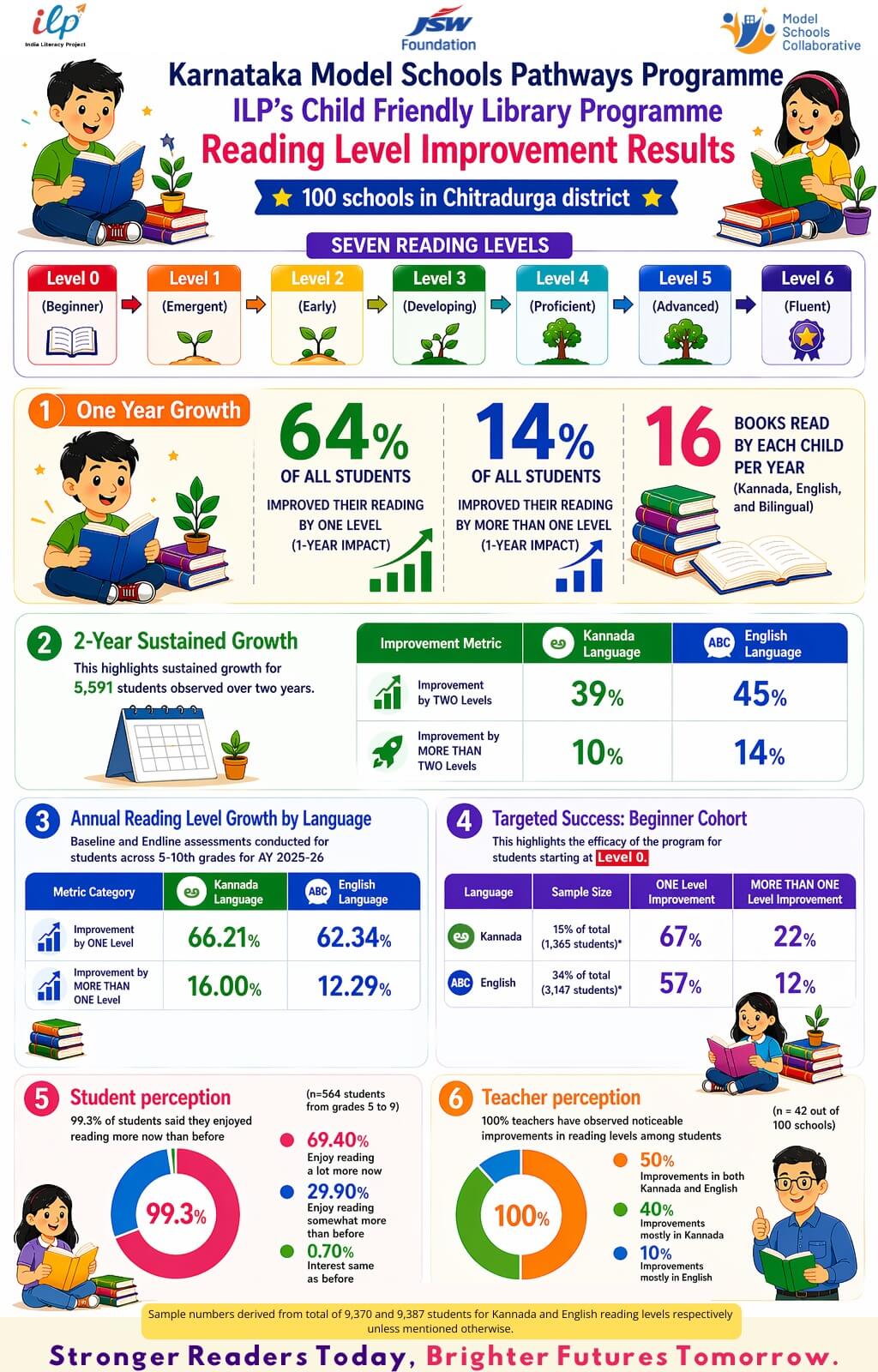
The 𝗞𝗮𝗿𝗻𝗮𝘁𝗮𝗸𝗮 𝗠𝗼𝗱𝗲𝗹 𝗦𝗰𝗵𝗼𝗼𝗹 𝗣𝗮𝘁𝗵𝘄𝗮𝘆𝘀 𝗣𝗿𝗼𝗴𝗿𝗮𝗺 (𝗞𝗠𝗦𝗣𝗣), 𝘀𝘂𝗽𝗽𝗼𝗿𝘁𝗲𝗱 𝗯𝘆 𝗝𝗦𝗪 𝗙𝗼𝘂𝗻𝗱𝗮𝘁𝗶𝗼𝗻, is a strong example of this approach in action across 100+ schools in Chitradurga district of Karnataka.
Designed to strengthen foundational literacy and numeracy (FLN), improve enrollment and retention, and build stronger school ecosystems, the program brings together capacity building, infrastructure, holistic learning, and community engagement.
Within this, the Child Friendly Library (CFL) initiative by ILP offers an important insight: impact compounds when programs are phased, not rushed.
𝗬𝗲𝗮𝗿 𝟭 focused on access and habit-building—ensuring children engage with books regularly and begin to see reading as enjoyable, not instructional.
𝗬𝗲𝗮𝗿 𝟮 moved from exposure to engagement—supporting emerging readers through guided activities and stronger teacher facilitation.
𝗕𝘆 𝗬𝗲𝗮𝗿 𝟯, the emphasis shifts to ownership—embedding these practices within schools so that teachers can independently sustain them.
What stands out is not just how the program was designed, but how it keeps improving. Learnings from the ground are regularly used to make changes, so the model stays relevant instead of remaining fixed.
Because in education ecosystem, scale may extend reach, but it’s sustainability that drives lasting outcomes.
Thank you Savita Mundhe and Sattva Consulting. Proud to partner with you.
#SustainableChange #GovernmentSchools #EducationMatters #ReadingCulture #EducationForAll