
We often talk about improving education as though the answer lies in finding the right program.
But education systems rarely change through one program, one organization or one idea. They move forward when people working across different parts of the system come together, examine what is happening on the ground, learn from one another and are willing to rethink what comes next.
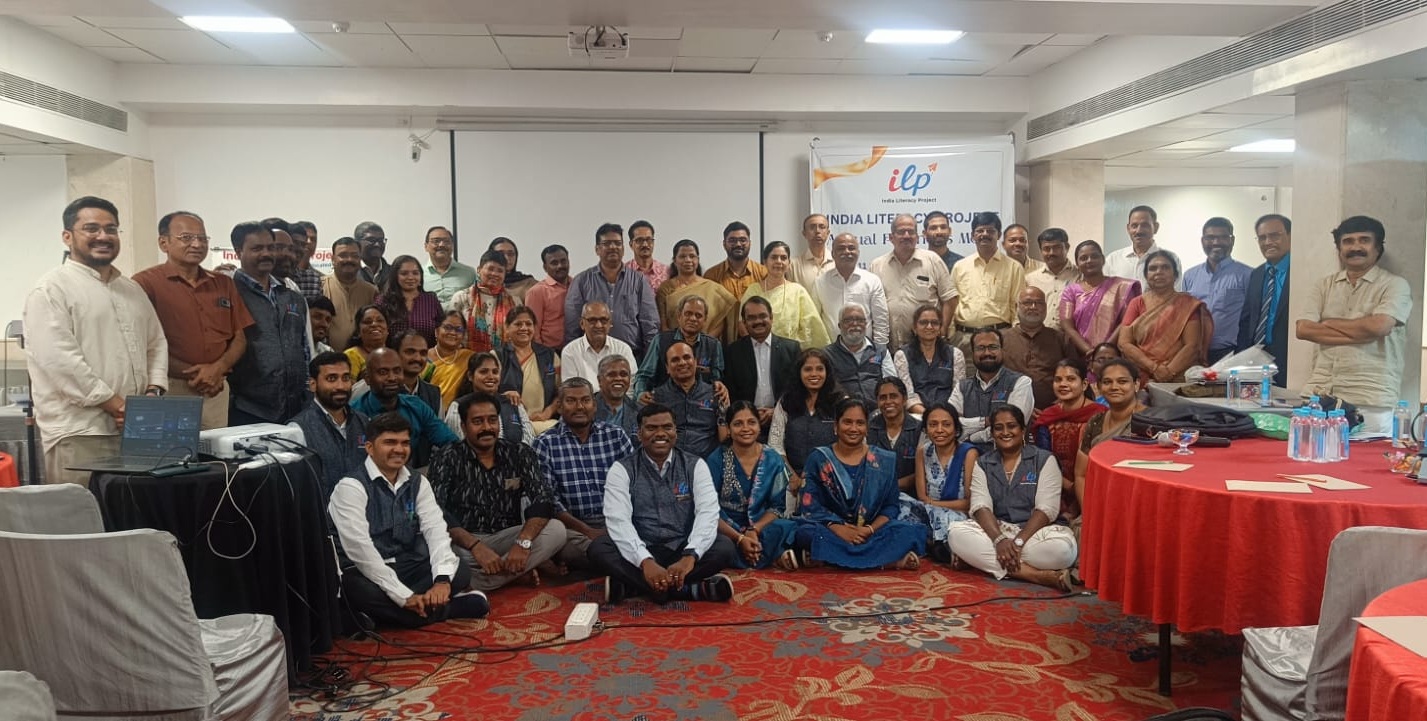
That was the spirit of the ILP Annual Partners Meet 2026.
The keynote by Dr. Mylswamy Annadurai, Moon Man of India set the tone by sharing his personal story of studying in a cow shed and eventually helping India reach for the Moon and Mars, a powerful reminder that where a child begins need not determine how far they can go, as long as they have the opportunity to learn, dream big and pursue those dreams.
The two-day conversations moved from that larger idea to the realities of education on the ground.
Seema Rajput of Language and Learning Foundation brought field perspectives on FLN TaRL implementation, what is progressing, where the challenges lie and what we can learn from implementation.
Dr. Kavitha Maithily and Dr. Thahira Banu of Gandhigram Rural University explored early childhood education and the possibilities of an all-India approach.
There were equally important conversations about what it takes to sustain and scale this work. CA Sanjay Agarwal of AccountAid addressed the regulatory and financial realities for NGOs. Padmaja Sathyamoorthy, Volunteer and Madhumita Raghavan, ILP Chennai, shared work around Vidya Saathis and the Career Compass Webapp.
Ambalavanan Ramachandran, Trustee, ILP, led discussions on the future of skills and livelihoods. Karthik Natarajan and Sakina Attarwala of Fields of View looked at how tools and games can help address societal challenges.
And Rekha Srinivasan of United Way of Hyderabad brought the CSR perspective into the conversation, what it takes to scale education programs and, importantly, what we learn from the challenges of doing so.
What stood out was that these were not conversations about doing more. They were about doing better, building approaches that work within the realities of government schools, strengthening what already exists, and taking what works to many more children.
For ILP, that is what partnership means: learning together, questioning assumptions and building solutions that can become part of the education system itself.
Because every child deserves the opportunity to go further than where they began.
And perhaps that is the real lesson from Dr Annadurai’s story: where a child starts should never determine how far they can go. Bottom of Form