
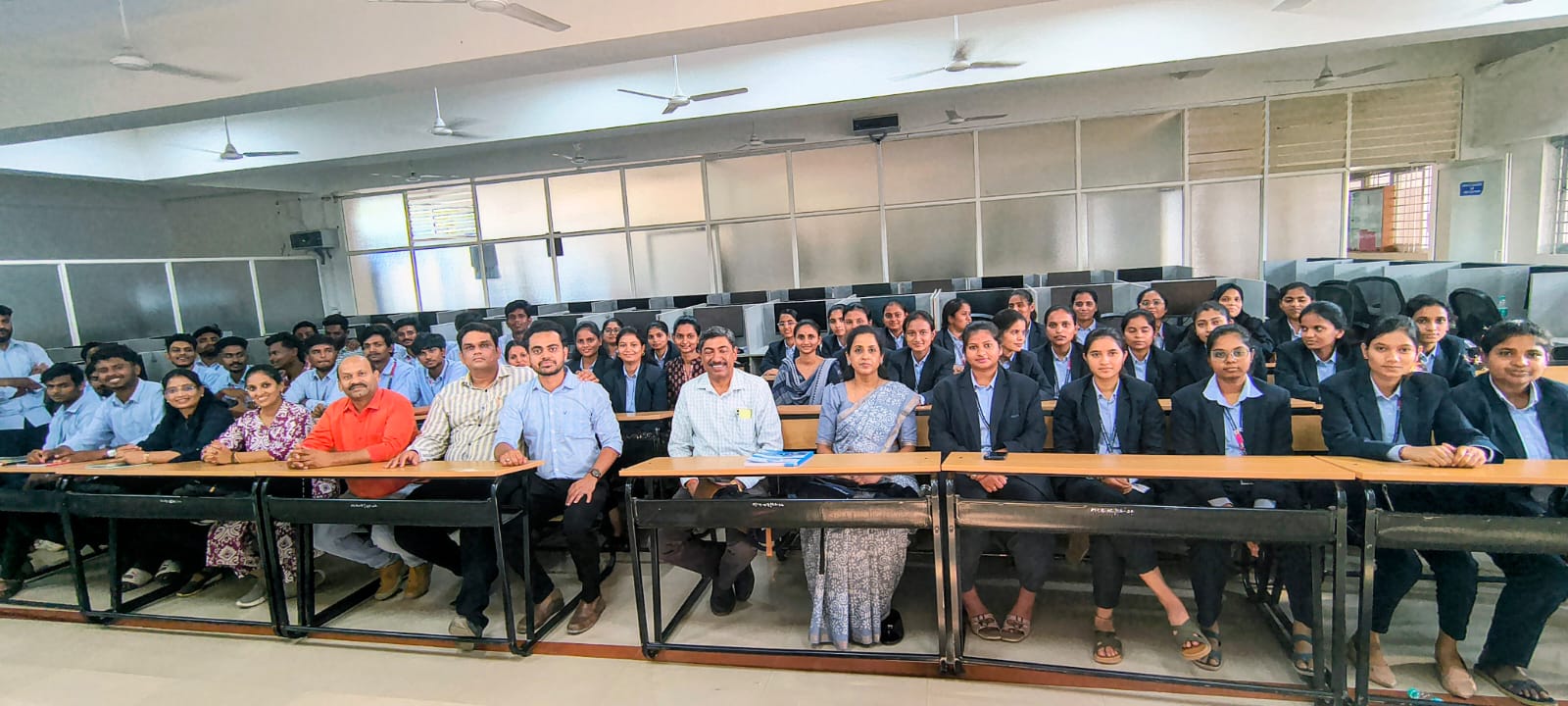
In January, we hosted our first 𝗖𝗮𝗺𝗽𝘂𝘀 𝗖𝗼𝗻𝗻𝗲𝗰𝘁, a full-day program at Davangere University for M.Sc and MCA students and it began with a simple question: 𝗪𝗵𝘆 𝘄𝗮𝗶𝘁 𝘂𝗻𝘁𝗶𝗹 𝗴𝗿𝗮𝗱𝘂𝗮𝘁𝗶𝗼𝗻 𝘁𝗼 𝗽𝗿𝗲𝗽𝗮𝗿𝗲 𝘀𝘁𝘂𝗱𝗲𝗻𝘁𝘀 𝗳𝗼𝗿 𝘁𝗵𝗲 𝗿𝗲𝗮𝗹 𝘄𝗼𝗿𝗹𝗱?
Over the years, we’ve worked closely with young professionals stepping into their first jobs. What we’ve consistently observed isn’t a lack of talent — it’s a challenge in transition. Bright graduates often bring strong academic foundations, but limited exposure to workplace expectations, professional behaviour, and informed career choices.
Campus Connect grew from that insight.
Rather than engaging with students only at the hiring stage, we chose to connect earlier — while they are still discovering their strengths and learning how to translate them into professional settings.
The larger vision is long-term: to build holistic career readiness, not just support job placement.
The program went beyond interview preparation. It focused on communication, workplace conduct, career awareness, life skills, personality development, problem-solving, creativity, aptitude, and entrepreneurial thinking — capabilities that sustain growth over time.
In this first engagement, interview readiness became the anchor. Through mock interviews, self-reflection exercises, and practical conversations about what employers genuinely value, students began shifting from “How do I answer correctly?” to “How do I present myself authentically?”
They were also introduced to pathways in the social sector, broadening their perspective on what meaningful, impact-driven careers can look like.
The outcome was encouraging in the form of thoughtful questions, active participation, and a noticeable shift in clarity and confidence.
Our sincere thanks to Dr. Basaanna M, Dr. Chandrakant N, and Dr. Kumar Siddamallappa U for their partnership and support.
Campus Connect is just beginning. The long-term goal is simple: engage early, smooth the transition into the workplace, and help young professionals step into their first roles prepared and self-assured.
#CampusConnect #CareerReadiness #WorkplaceSkills #IndustryAcademia #EmployabilitySkills
At the height of the COVID-19 pandemic, when school closures threatened to create lasting learning gaps, India Literacy Project (ILP) launched the Village Learning Centers (VLC) and Vidya Saathi (VS) programs with a single, urgent goal: to stem learning loss and ensure that children in rural communities did not fall behind.
What began as a pandemic response has since grown into one of ILP’s most meaningful and community-driven initiatives. Today, we are proud to reflect on the tangible impact of these programs—and the inspiring ownership taken by the communities themselves.
Building Learning Ecosystems in Rural Andhra Pradesh
During 2021–2022, ILP established 105 Village Learning Centers across 105 villages in seven mandals of Andhra Pradesh: Gara, Srikakulam (Rural), Etcherla, Ponduru, G. Sigadam, Laveru, and Ranastalam.
Under the guidance of the Project Director, and with the collaborative efforts of Youth Club Bejjipuram (YCB), Balavikas, and the School Readiness Team, a dedicated group of seven community organizers and one project coordinator worked tirelessly to bring the program to life. Anganwadi teachers played a crucial role in identifying and selecting Vidya Saathis—local volunteers who would become the backbone of each learning center.
Another major effort involved going door-to-door to mobilize children and families. Through trust, persistence, and community engagement, children were brought together in safe, supportive learning spaces—where Vidya Saathis helped them not only catch up, but thrive.
Measurable Learning Gains
Over a nine-month period, the impact was clear and measurable. 1,466 children showed improved learning levels across Mathematics, English, and Telugu.
A comparative study conducted in 2022–2023 revealed:
-
75% of children improved their achievement levels in Mathematics
-
71% showed improvement in English
-
69% demonstrated progress in Telugu
As schools reopened post-pandemic, both parents and teachers observed noticeable improvements in children’s confidence, comprehension, and academic performance—affirming the effectiveness of the VLC/VS model.
Community Ownership: A Powerful Endorsement
As ILP transitioned out of pandemic-specific programming, funding reallocations led to a reduction in the number of VLCs from 105 to 50. What followed, however, was nothing short of remarkable.
Recognizing the value of these learning centers, local communities stepped forward to sustain 65 VLCs independently—a powerful testament to the trust and impact ILP has built at the grassroots level.
Community-supported VLCs continue through:
-
30 VLCs funded by parent support
-
23 VLCs supported by Headmasters and teachers
-
3 VLCs supported by local industries
-
8 VLCs sustained through the volunteer efforts of Vidya Saathis
-
1 VLC funded by village employees
This heartwarming development is truly a feather in our cap. It demonstrates that VLCs are no longer just ILP-run initiatives—they are community-owned institutions. This strong local foundation now enables ILP to redirect resources and attention to other villages and regions that need support.
Beyond Academics: Protecting Childhoods
The impact of Vidya Saathis extends well beyond classroom learning. They are often trusted advocates for children’s rights and well-being.
One such powerful story comes from Odisha, through our partner NGO Unified Action Council (UAC), NIMAIN. A 13-year-old girl studying in Class VIII had been engaged for marriage. Recognizing the seriousness of the situation, Vidya Saathis, community organizers, and partner NGOs acted swiftly.
Through sustained dialogue and intervention, the child marriage was successfully prevented. The parents provided a formal undertaking that the marriage would not be solemnized before the girl turns 18 years old, with an understanding of the legal consequences otherwise.
Looking Ahead
From bridging learning gaps to safeguarding childhoods, the VLC and Vidya Saathi programs exemplify what is possible when communities, volunteers, and organizations work together with shared purpose.
As we look ahead, ILP remains committed to expanding this model—bringing learning, protection, and opportunity to even more villages across India.
Together, we are not just supporting education—we are strengthening communities for the long term.