
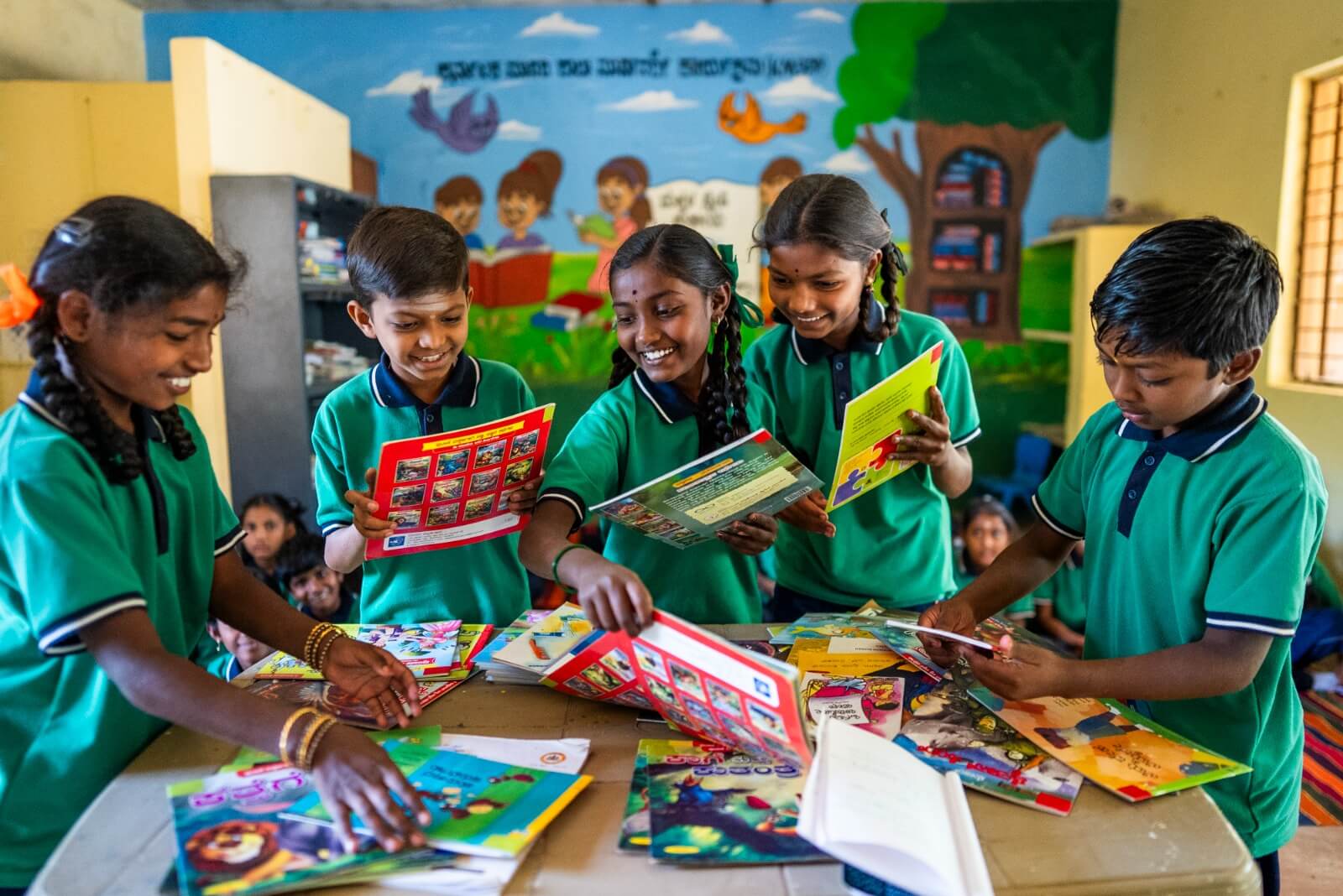
We often talk about improving reading levels as though reading is just another competency to measure.
But the bigger question is: what kind of relationship are we helping children build with reading?
A Child Friendly Library answers that differently.
The idea is deceptively simple: children encounter books that match where they are as readers, in a space that makes them want to return. Books organised by reading levels allow children to begin with what they can read, experience success and gradually move towards more complex texts.
That progression has implications far beyond the library.
A culture of reading creates another pathway to independent learning. With books in Kannada, English, bilingual formats and STEM, the library also gives children multiple entry points into learning through language, stories, concepts and subjects beyond the textbook.
There is an important equity dimension too. Children do not enter school with the same exposure to books or the same reading abilities. Designing the library around the child’s current level recognises that difference without turning it into a limitation.
For schools and teachers, the library can become part of the learning culture rather than a peripheral facility. Reading-level assessments help track progress, while trained librarians help sustain that culture.
Perhaps the real promise of a child-friendly library is not what it puts on a shelf, but what it puts within a child’s reach; new subjects, perspectives, questions, possibilities and ways of thinking. In doing so, it can expand not just a child’s reading, but the possibilities of what learning can become.
#ChildFriendlyLibraries #EducationForAll #ReadingCulture #ChildCentredLearning #LearningBeyondClassrooms #SchoolLibraries