
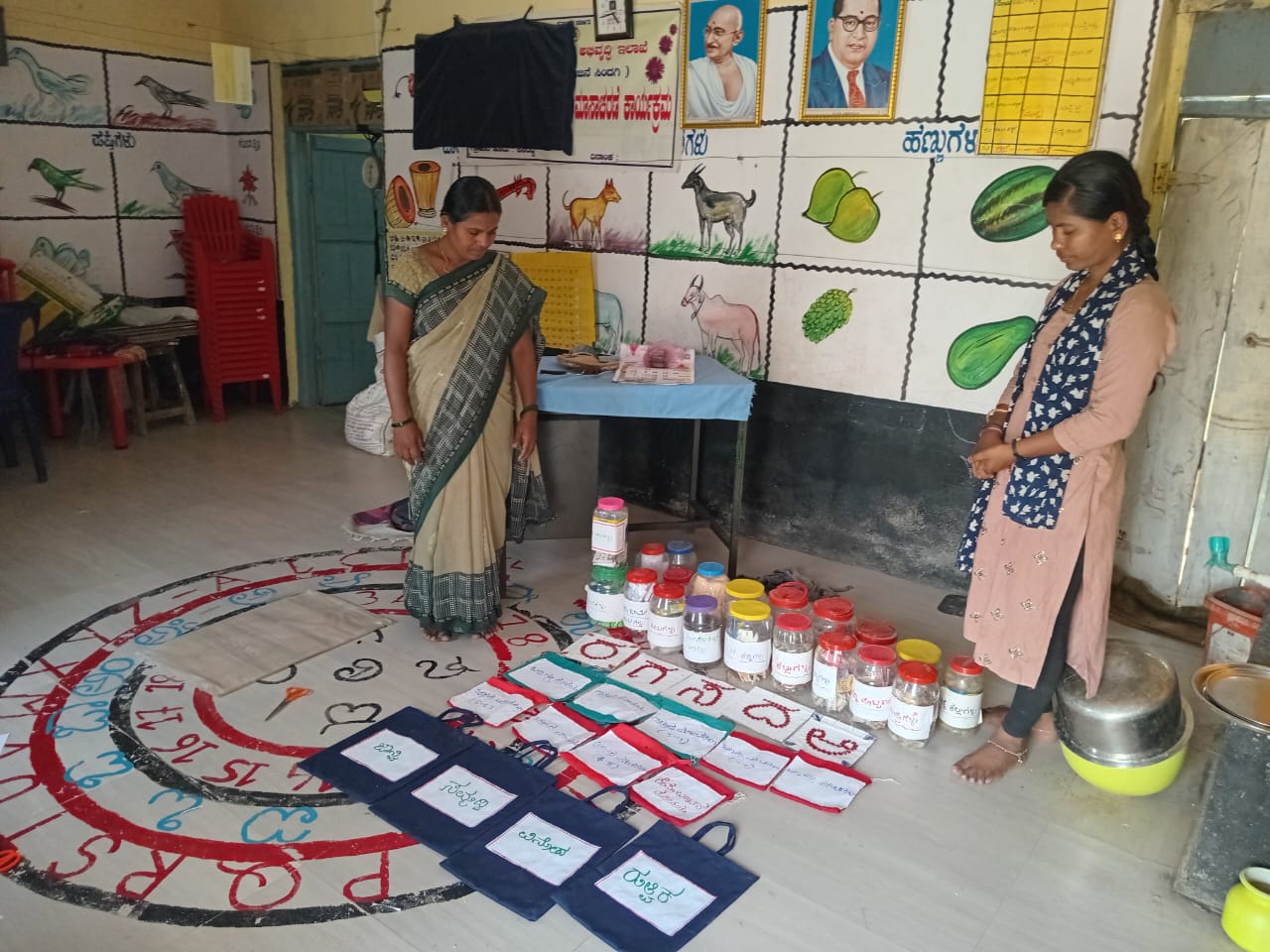
Walk into any Anganwadi, and you’ll often find children gathered around simple, colorful objects—sorting, stacking, matching, and laughing as they learn.
𝗧𝗲𝗮𝗰𝗵𝗶𝗻𝗴 𝗟𝗲𝗮𝗿𝗻𝗶𝗻𝗴 𝗠𝗮𝘁𝗲𝗿𝗶𝗮𝗹𝘀 (𝗧𝗟𝗠𝘀) are at the heart of this experience. They help young children make sense of the world by turning ideas into something they can see and touch. At that age, learning isn’t abstract—it’s physical, playful, and deeply interactive.
What makes TLMs in Anganwadis meaningful is that almost all of them are 𝗵𝗮𝗻𝗱𝗺𝗮𝗱𝗲 𝗯𝘆 𝘁𝗲𝗮𝗰𝗵𝗲𝗿𝘀. Using everyday materials like cardboard, color papers, fabric scraps, seeds, sticks, and bottle caps, teachers create tools that reflect the child’s environment. A counting activity might use tamarind seeds; a color lesson might come from pieces of old saree or cloth. Learning becomes familiar, relatable, and easier to grasp.
These materials also carry 𝗶𝗻𝘁𝗲𝗻𝘁 𝗮𝗻𝗱 𝗮𝗱𝗮𝗽𝘁𝗮𝗯𝗶𝗹𝗶𝘁𝘆. Teachers observe how children respond and keep refining what they create. Each piece is shaped by real classroom needs, not a standard template.
At a time when so much around us is machine-made and mass-produced, these handmade TLMs stand out. They bring learning back to touch, interaction, and human connection where curiosity isn’t rushed, but allowed to grow.
In many ways, these humble materials reflect an important truth: Sometimes, the most effective learning tools are not the most advanced but the most thoughtful.
𝗦𝗽𝗲𝗰𝗶𝗮𝗹 𝘁𝗵𝗮𝗻𝗸𝘀 𝘁𝗼 𝗼𝘂𝗿 𝗡𝗚𝗢 𝗣𝗮𝗿𝘁𝗻𝗲𝗿 𝗦𝗡𝗘𝗛𝗔 for their on-ground, hands-on support in helping Anganwadis create these TLMs.
#Anganwadi #EarlyChildhoodEducation #FoundationalLearning #TeachingLearningMaterials #LearningThroughPlay