
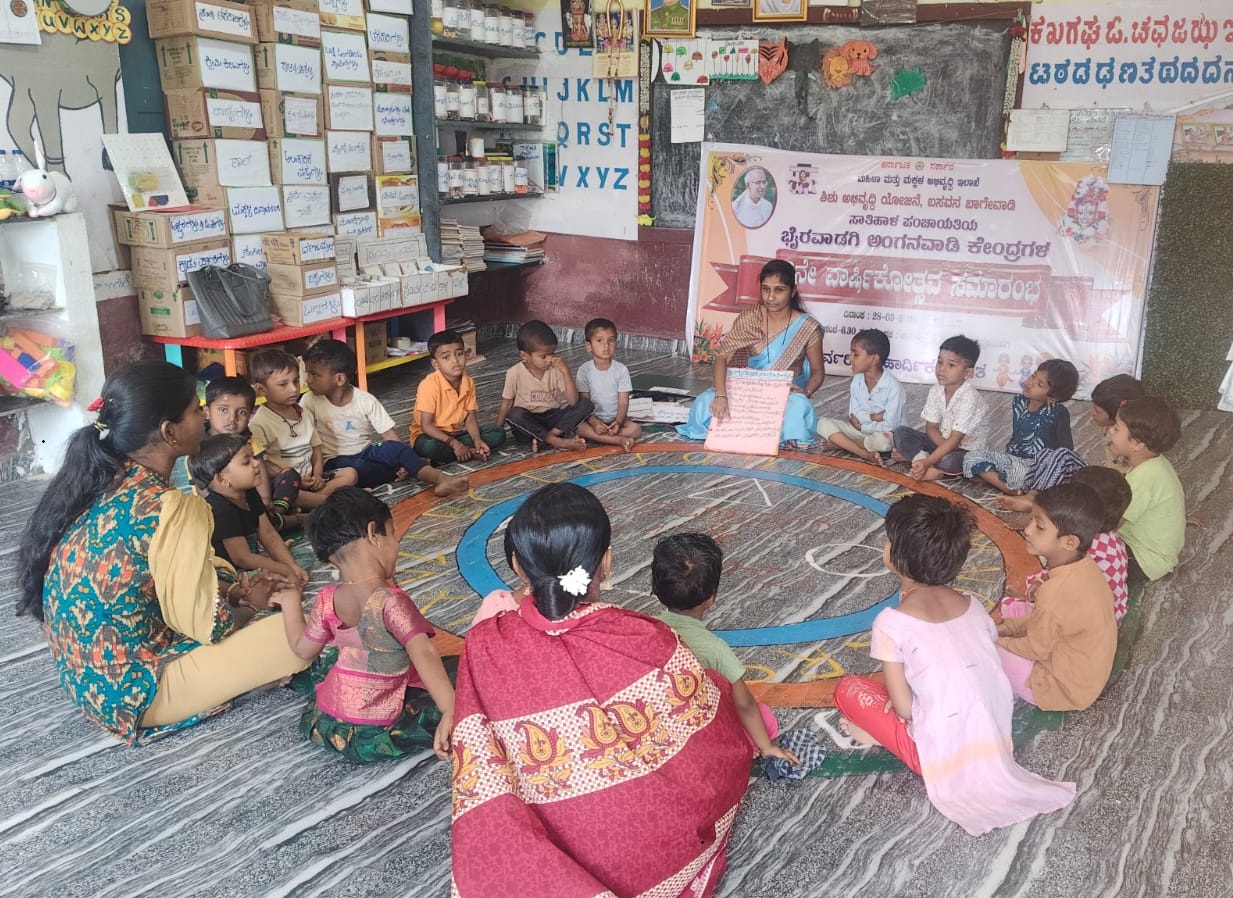
In Talikote village in Karnataka, an Anganwadi has quietly come a long way.
Not long ago, it ran out of a rented space, with just 7–8 children attending. For many families, it didn’t feel like something they needed to prioritise. Awareness was low, and the centre was simply there—but not fully valued.
The change didn’t come overnight. It started with small, steady steps.
Through Pre-School Education (PSE) training, the Anganwadi teachers started bringing more intention into everyday activities—understanding how children learn, not just what to teach. At the same time, regular meetings with parents and the community opened up conversations around early childhood development, nutrition, and the importance of consistent attendance.
As trust grew, so did participation.
Families began to see the Anganwadi not as a place to “leave children,” but as a space where children grow. This belief translated into action—the community came together to donate land worth ₹22 lakh, leading to the construction of a dedicated Anganwadi building. Alongside, they contributed ₹25,000 towards Teaching Learning Materials (TLM), strengthening the learning environment.
Two years later, the difference is visible and systematic.
- Children arrive regularly, with attendance rising to 25–30 every day
- The day is structured with age-appropriate, play-based learning activities
- TLM is actively used to build cognitive, motor, and social skills
- Parents stay involved, aware, and invested in their child’s development
- The centre is seen as a community asset—owned, valued, and supported
What changed is not just the infrastructure or numbers. It’s the mindset of the parents, and the community.
From a rented room with a handful of children to a vibrant, community-owned learning space, this Anganwadi reflects what transformation looks like when systems, support, and belief come together.
Special thanks to our NGO Partner SNEHA and for helping with this transformation.
#EducationForAll #Anganwadis #GovernmentSchools #FLN